
Flowrish
UX/UI Case Study by Jennifer Jew
Contact: jewjenn@gmail.com
Flowrish
A mobile app that uses augmented reality to help visualize native plants in your space.
Problem Statement & Solution
Design
Process
Research
Our client initially requested interviews with Water Companies. However, after attempting various outreach methods including email, voice messages, and chat support, I opted to pursue a different approach. I conducted interviews with Landscape Designers from Water Efficient Gardens, Enhanced Landscape Management, and Solera at Kern County, all engaged in California's Save The Water campaign, particularly through local rebate programs.
Impact Immersive was testing the Flowrish prototype with users who have gone through a yard transformation or are interested in gardening.
The testing aimed to evaluate user navigation through the augmented reality feature for planting native plants or turf removal. Upon joining, our team was tasked with research on water companies, native plant nurseries, and DIY gardeners. Each teammate focused on a different user group: I conducted Zoom interviews with landscapers connected to water companies and Mingshi and Vivian did in-person interviews with nursery owners and gardeners. With limited time, we gathered insights to help confirm the client's target audience and better understand their behaviors and motivations around water conservation.
Landscape Interviews

"My landscape company must have visual 3D renderings or photos at in person events to gain protential customers."
"As a Property Manager, Landscapers know which nurseries would have the plants I'm looking for to achieve the design layout."
"As a Landscape Designer, we are the best resources when suggesting or designing with native plants."

"As a Native Plant Nursery manager, I have been asked to visually explain the size of a plant in addition to picture tags on the plants."
Native Plant Nursery Interviews
At the client's direction, our teammate, Vivian, concentrated on visiting local Native Plant Nurseries in northern California. Vivan was able to go in person and speak with the owners and collect insights into these nurseries. Our objective was to understand more about the connection native plant nurseries have with water-conscious programs in California.

"Having a QR code with each plant can easily give access to customers to view multiple stages of the plant growth."
"Customers don't have questions about turf removal, but have many questions about native plants due to lack of research."
Gardener Interviews
Mingshi adopted an alternative approach with Gardeners by engaging in conversations with customers at Home Depot's nurseries and asking questions with gardener enthusiasts in Santa Clara's Native Plant Facebook community group. As a team, we assessed behaviors from gardeners, whether they sought professional landscapers for yard transformations and their knowledge in turf removal and native plant installations.
"Joined Facebook local Native Plant gardening groups to learn the know how's."
"How will certain native plants look when fully grown? Where can it be planted and how much water does it need?"
"Barely heard of turf removal or don't know about it other than guess what it is from the name itself."
"I had a bad experience with a Native Plant Landscaper that changed my lawn but not too long after all my plants died.
Competitive Analysis
User Research
Augmented Reality
Plant Apps
I've previously used augmented reality for furniture shopping but haven't explored AR applications further. To gain a better grasp of the market, we conducted competitive research to assess the effectiveness and note areas that need improvement in existing AR apps.

Blossom

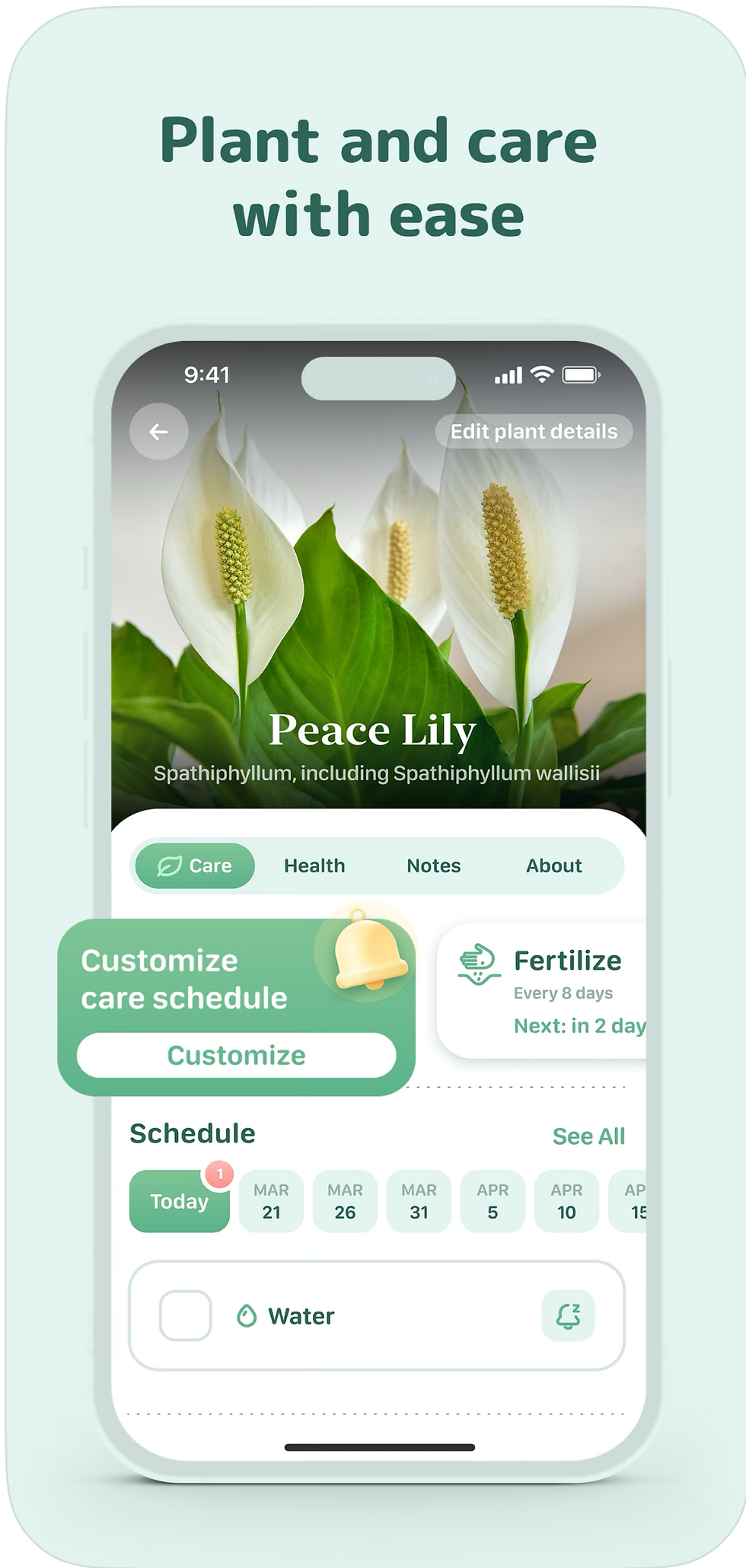
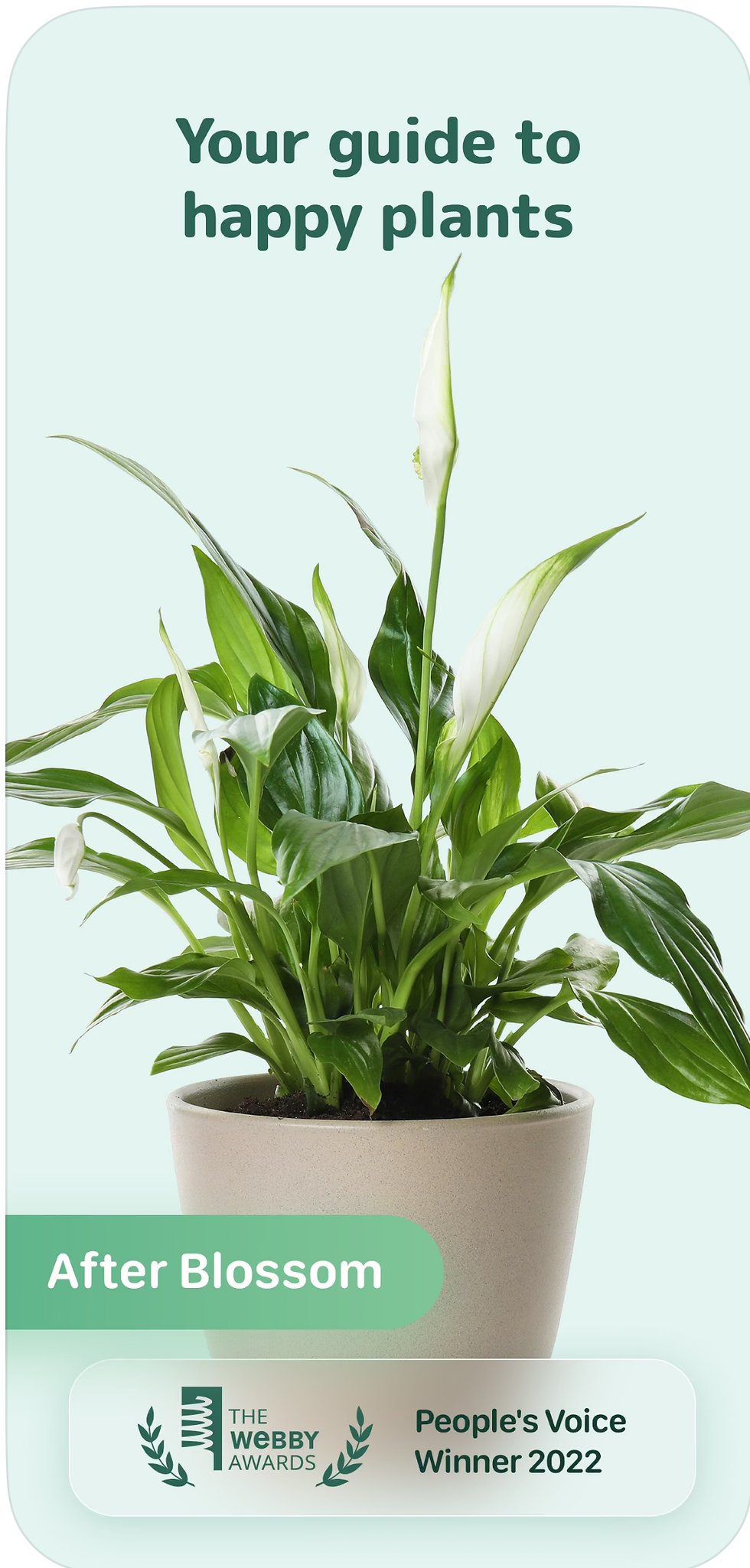

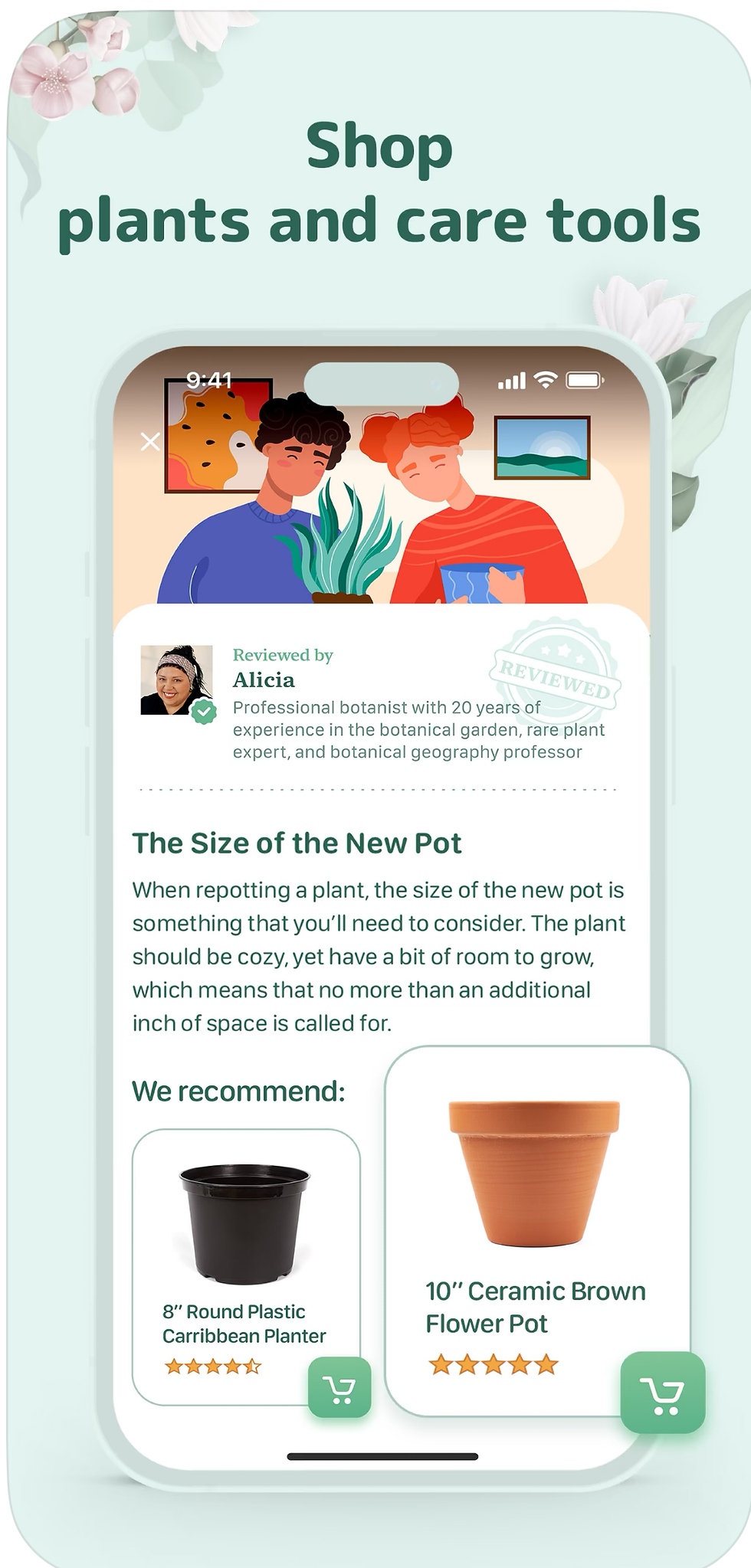

Plant Life Balance


Likes
-
app has an educational format to keep the user learning how to be a plant expert.
-
clean and simplistic UI that helps users feel calm and open to learning.
-
resourceful to have a shop within the app to purchase planting needs and care tools with ease.
Dislikes
-
though the UI is minimalistic the variety of resources that are available felt overwhelming.

Plant Snap


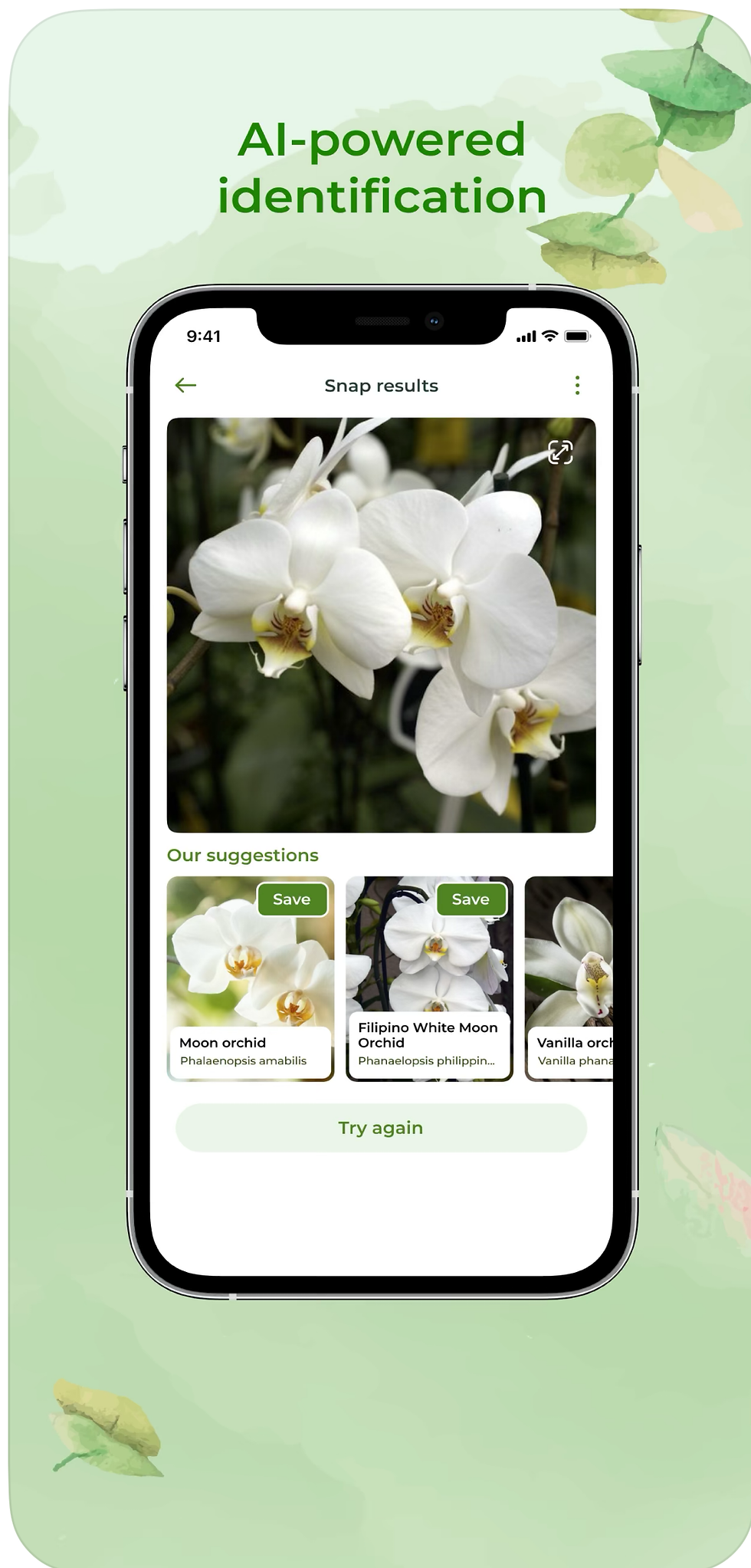
Likes
-
I like how there is a custom feel by choosing how big the space is, the different sizes of the plants, and if it's an outdoor or indoor space.
-
Having the plant visuals side by side does help to see the size difference.
-
Rate My Space is informative and interesting.
Dislikes
-
I would want to know if the small, medium, and large plant sizes are full grown.
Affinity Mapping
Likes
-
The app formats the community like Instagram to lessen the learning curve.
-
Plant details are helpful for those who are not experts.
-
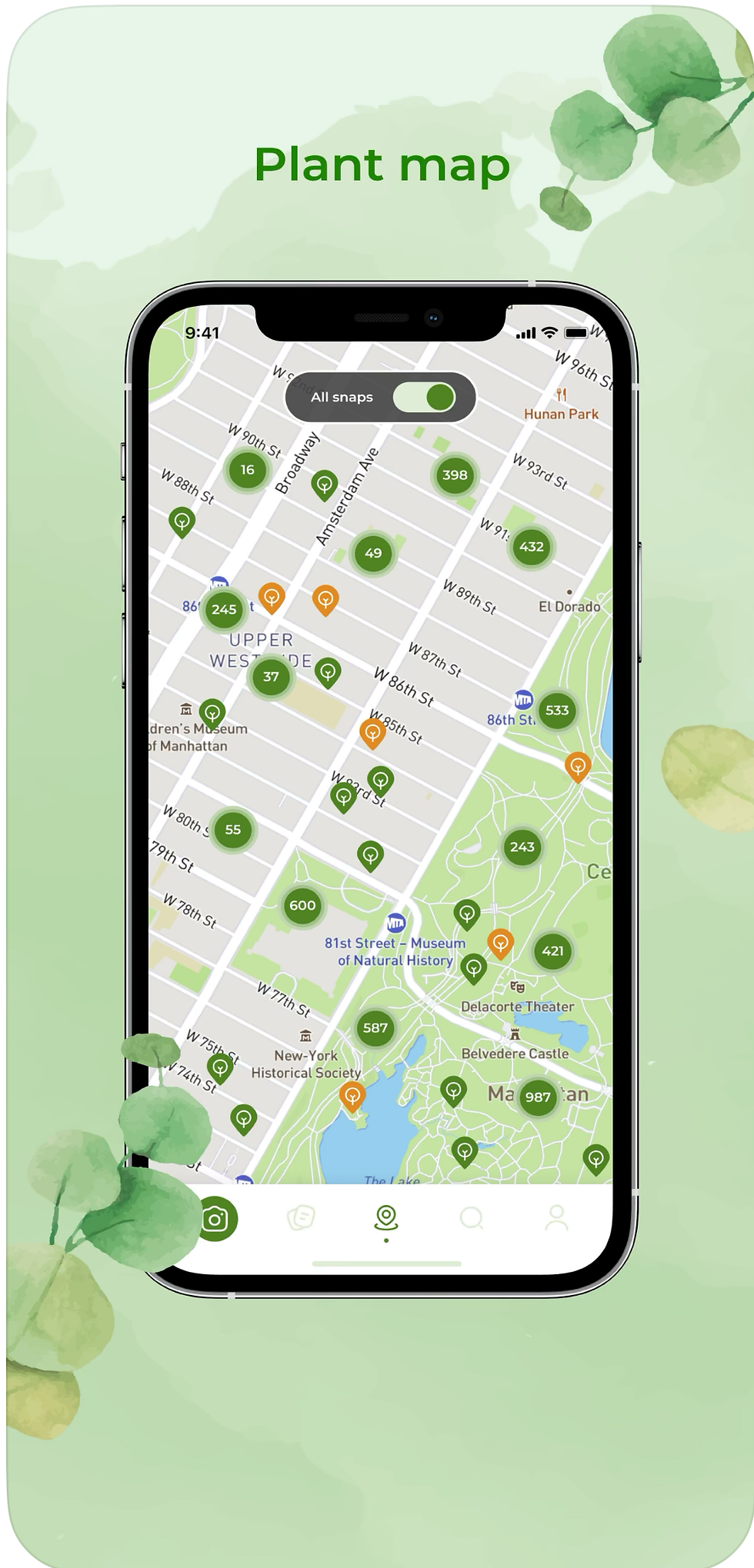
I appreciate the Plant Map to locate where to purchase the plant.
Dislikes
-
If I were wanting a plant I wouldn't know which one would be fitting for my space.
Card Sorting and Themes
During our research process, our team struggled with the challenge of setting aside preconceived notions related to the existing prototype. However, once we began interviewing we began to look outside the initial target audience and interview methods. I found that landscapers were the middlemen between water companies and the client and Mingshi and Vivian not only interviewed in person but utilized Facebook Native Plant groups to connect with people. We concluded that we had gathered enough insight to evaluate and synthesize our findings.
For the Card Sorting, my teammates and I decided that we would continue each design process by being responsible with the users we interviewed: Jennifer - Water Companies and Landscapers, Vivian - Native Plant Nurseries, and Mingshi - Gardeners.
The different color cards help us indicate the different people we interviewed. Since our card sorting was done on FigJam we were able to view each other's sorting and contribute interview comments that may benefit another user group.
Themes were surfacing from card sorting which generated some solutions that would meet the needs of potential users.


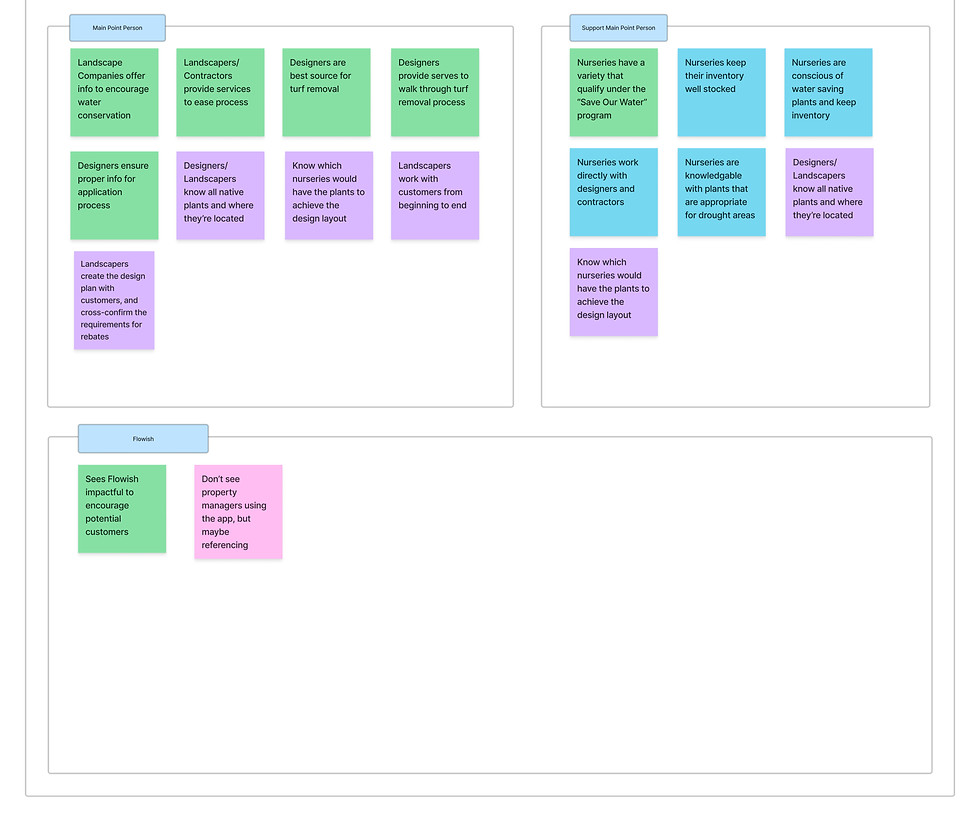

Main point person for professional help: Landscape Designers
Nurseries and Landscapers work together
Potential in Flowish reaching a variety of users
Themes
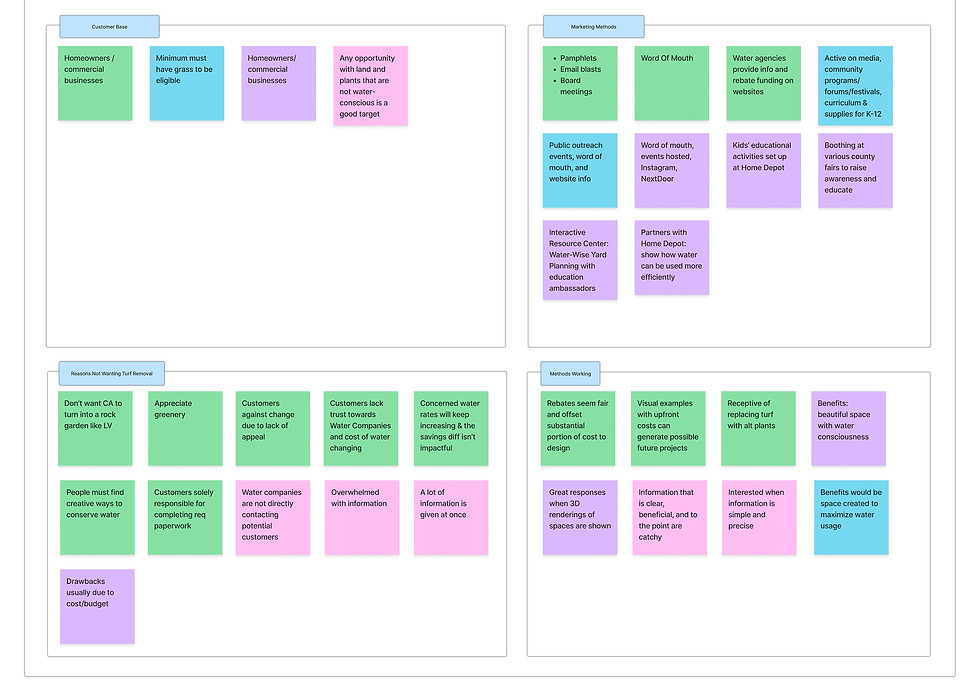
Marketing methods are word of mouth, events, pamphlets, emails
Uncertain how their landscape can look
Methods that work are rebates offset cost, visual examples, and what benefits them
Customers are homeowners and commercial businesses


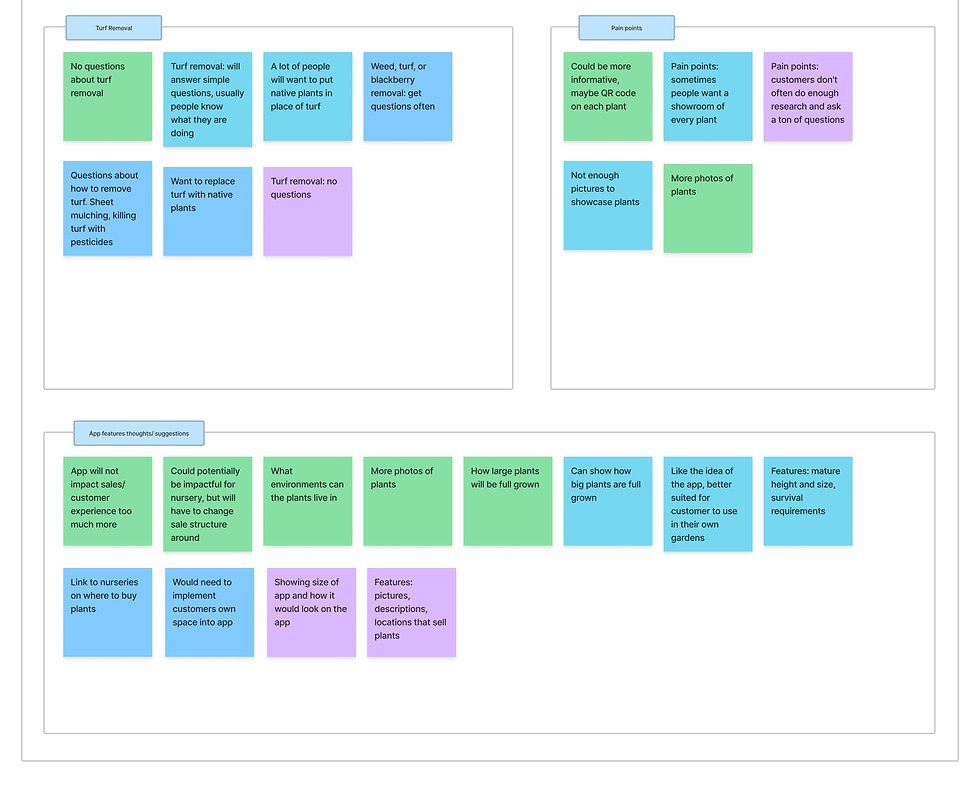
Customers have simple questions about turf removal, weeds, and how native plants
Pain points are not enough pictures of growth stages of plants
Flowish could provide plant details, plant care, growth stages, nurseries


Themes
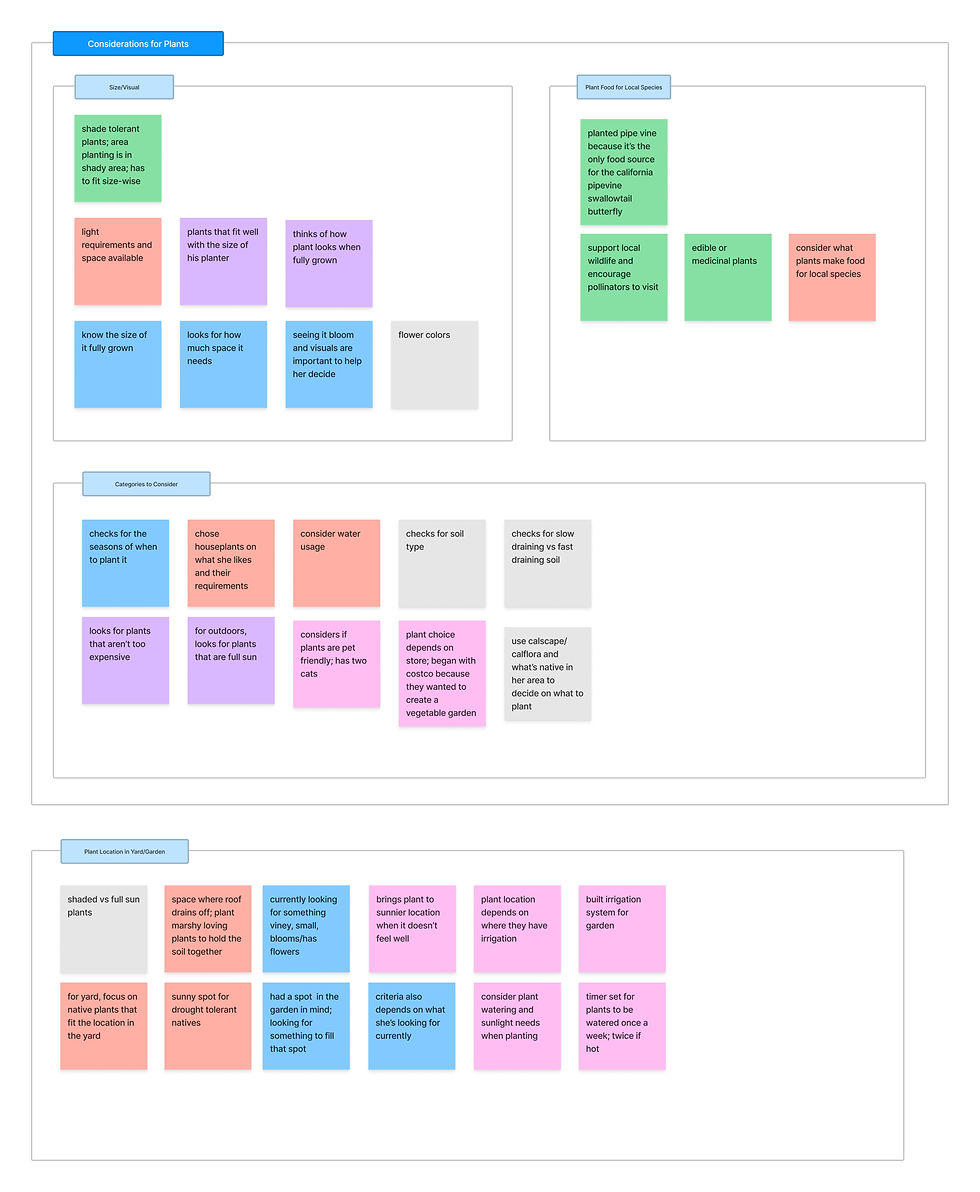
Consider plant growth, space needed, sun requirements
How to support local wildlife and be a food source for people
To consider: soil type, drainage flow, costing of plant, pet friendly
Plant location: amount of sun exposure, water schedule, space size
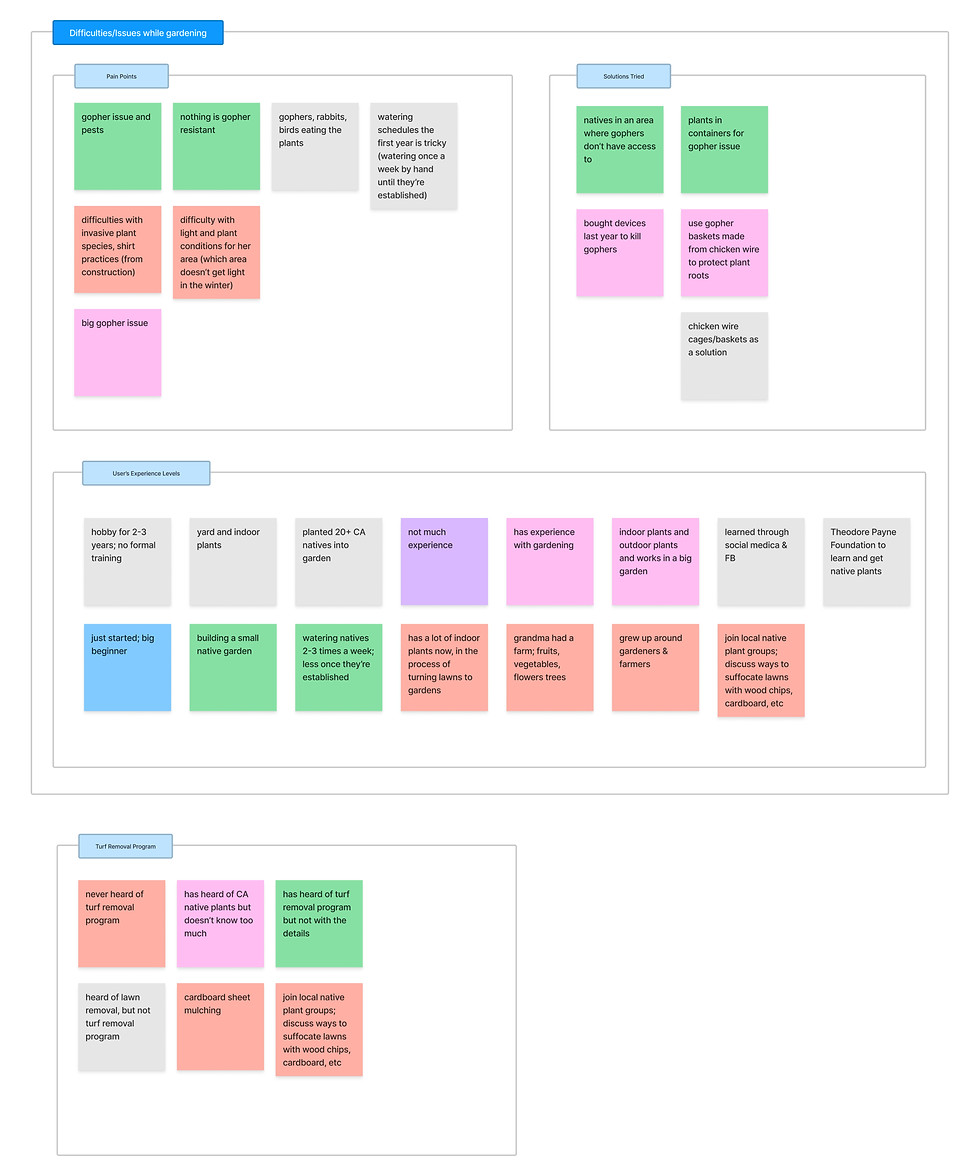
Animal and insect issues, tricky watering schedule
Solutions tried to deter animals and insects: devices, baskets, wires
Experience levels range from beginner to expert or knowledgable due to enviroment
Lack of knowledge on turf removal and native plants, read about plant care in plant groups
Themes
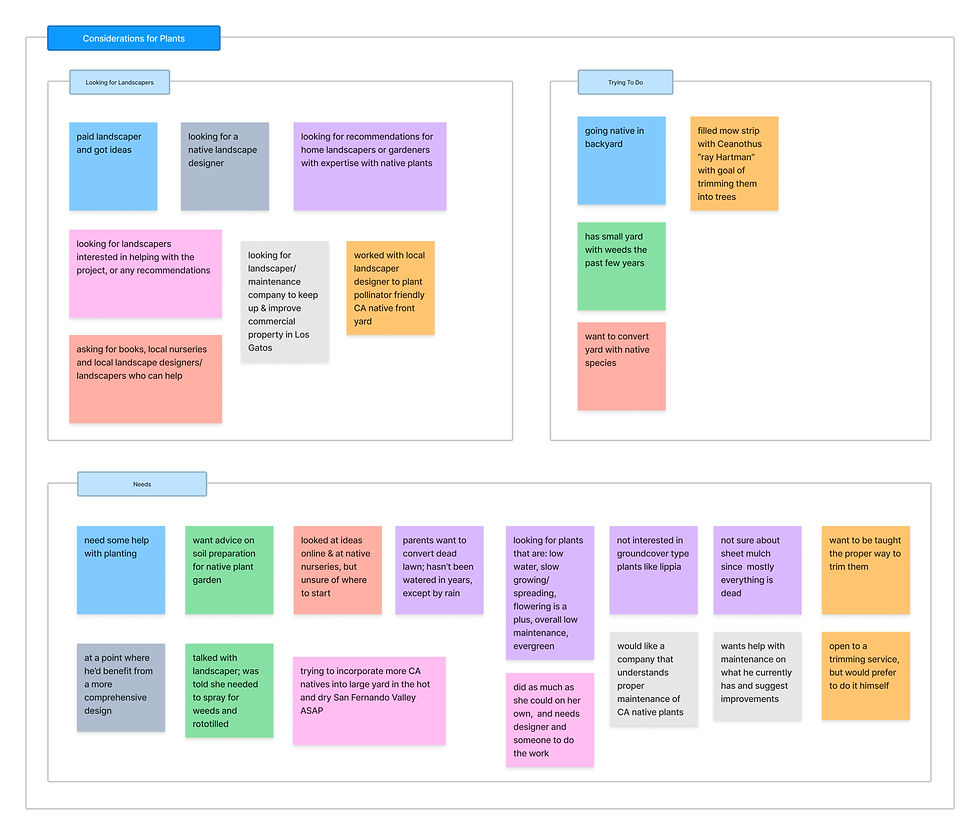
Looking for Landscaper that knows design and plants
Customers want to beautify space with low maintenance
Customer needs plant care, design work, maintenance

Landscaper had lack of native plant knowledge and not credible
Personas
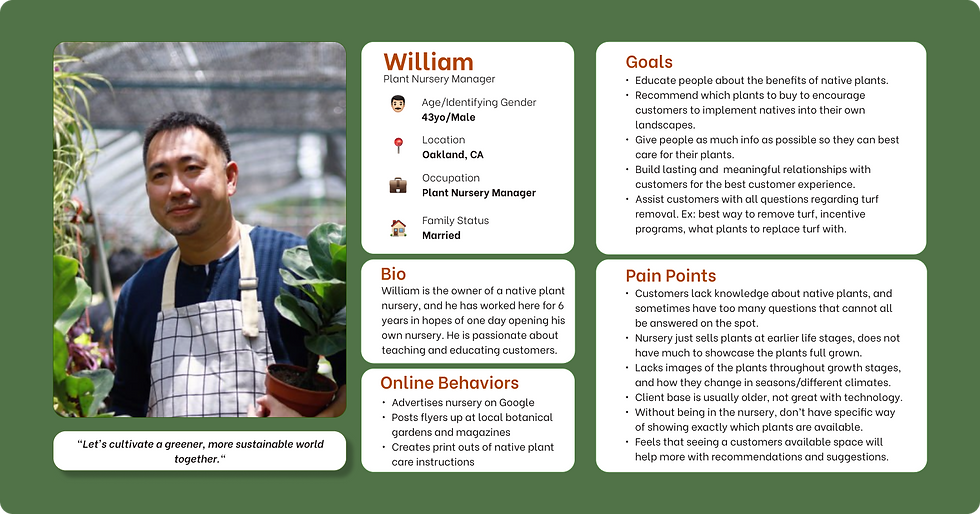
To ensure our team's approach has user-centered solutions, we created user personas to best understand each target group: Landscapers, Nurseries, and Gardeners approaching it as a DIY project or hiring a Landscaper.


User Journeys
From our card sorting and viewing the themes, we created User Journey's with Jennifer who worked on Landscapers, Vivian with Native Plant Nursery owners, and Mingshi with DIY Gardeners and Gardeners working with Landscapers, in order to design solutions that cover the user's needs.


User Personas
3-Panel Solution
Sketches
Flowrish's Designs
While a prototype was already in existence, our client requested our team to generate low-fidelity sketches. Given the limited time available, my teammates and I opted to divide responsibilities, and I focused on sketching the onboarding screens to introduce the app and it's capabilities.
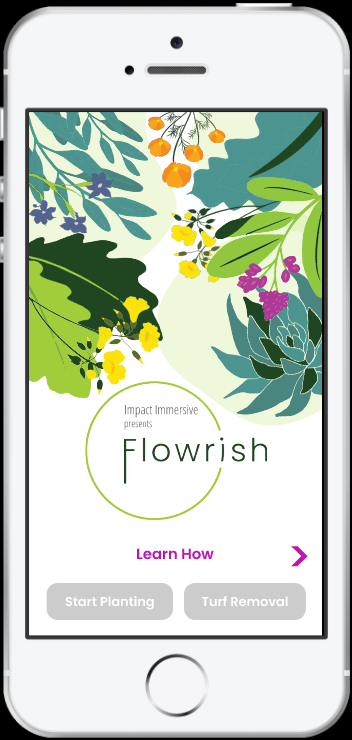
Client's Design Screens
My teammates and I received Flowrish's design screens to view what we can confirm and provide suggestions based off of our research findings. We saw that Flowrish had designed with the users in mind and can improve some aspects of the user interface. The tutorial screens from Flowrish were to not be altered drastically, but to improve the flow experience.

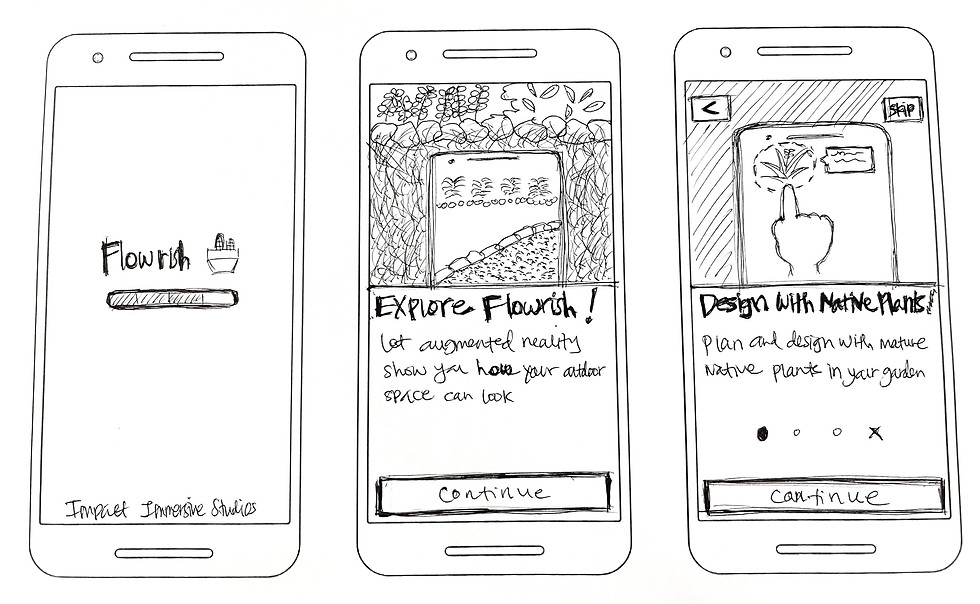

On-Boarding Sketches - By Jennifer
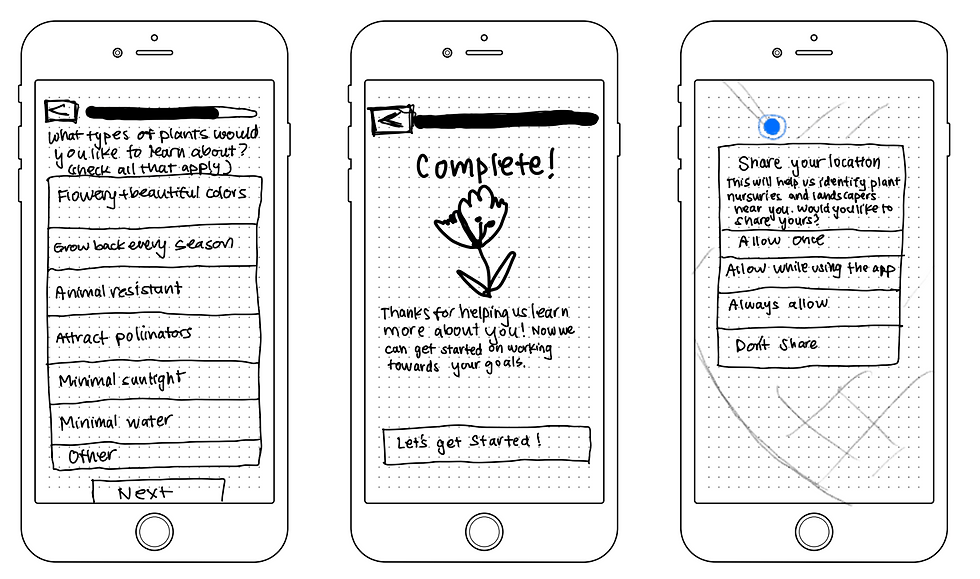
Setting Up The User - By Vivian

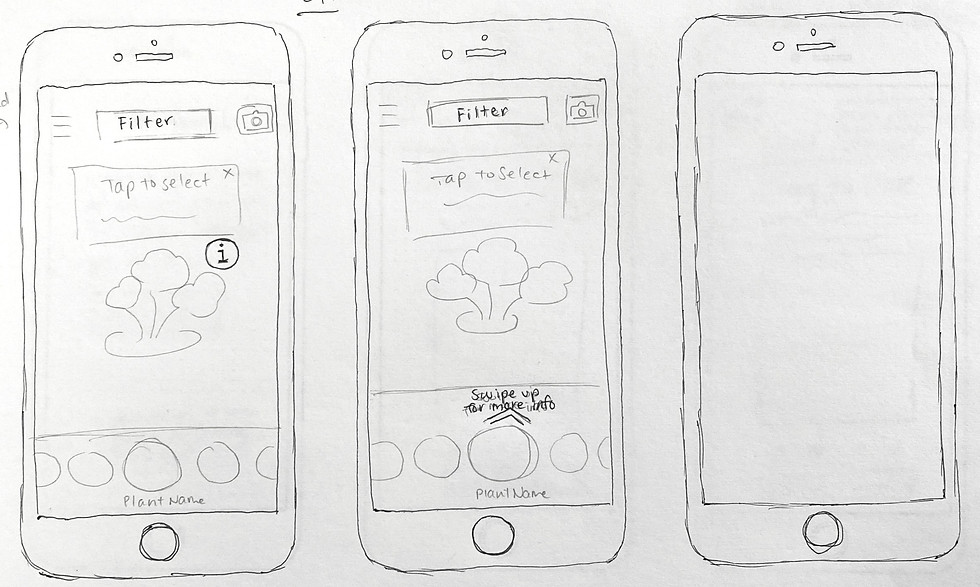
Tutorial Of App - By Mingshi

Through our interviews, we observed that users may have varying levels of ambition in their gardening, from simpler tasks like planting native plants to more extensive yard transformations. We recognized that collecting user information would be instrumental in tailoring gardening guidance to meet their specific needs
Team's Designs
Team's Design
With just a few days to work on high-fidelity designs, my teammates and I saw that we could utilize our client's tutorial screens on how to remove turf along with seeing how native plants look in your space. We worked together in Figma and communicated with the comment cursor feature late hours of the night with suggestions and edits on each of our design screens. Although we had divided who would work on which screens, my teammates were appreciative when I drafted a quick style guide and made user interface suggestions for their screens and vice versa. I believe due to our teamwork we were able to be in agreement and stay focused.
On-Boarding Screens - By Jennifer
Turf Removal Screens - By Vivan
Native Plant Screens - By Mingshi


Client's Feedback
Before starting on the high-fidelity screens, our client commented on the current Flowrish design that she was not "thrilled" and thought it could use an "updated look" with the on-boarding and was not fond of the floral illustrations nor colors used.
We kept in mind what our client had said and she approved all our design decisions. We wanted to keep a simpler color scheme and lessen the onboarding process so that users could focus on the task at hand without any distractions. We also modified the tutorial screens by graying out the screen and spotlighting the instructions and actions explained. Our client barely had any edits wanting to be made on the user interface, but to clarify her tutorial instructions. We were able to keep the turf removal and planting process easy to understand by exemplifying each step.
Reflection
My experience with my teammates highlighted the importance of effective communication in working efficiently to meet deadlines, especially when time constraints were a factor. As a team, we used various communication channels, held bi-weekly meetings with our client, and additional team meetings to ensure we were aligned with the client's expectations and project goals.
One challenge we encountered was the absence of prior research when evaluating the prototype. We were tasked with a narrow focus on Water Companies, Native Plant Nursery centers, turf removal programs, and gardening enthusiasts. We hesitated due to the limited perspectives we had to research because of the possibilities of overlooking solutions and users. To address this challenge and difficulty in connecting with the water company, we decided to interview individuals outside the targeted user group. In my case, I was able to casually ask an acquaintance whom I found out was a landscaper, and Vivian and Mingshi began reaching out to individuals in a Native Plant Facebook group. This approach provided us with valuable insights into how these groups were engaged in maximizing water supply.
Reflecting on this experience, I believe that when prototyping without prior research, it's important to approach research as if there were no solutions. Initiating a screening survey can diversify the audience and uncover overlooked user needs and preferences. An unbiased approach to research can reveal valuable insights.
Regarding the Flowrish app's future developments, I would add a feature that users would able to create, save, edit, and export their project plan decisions in one accessible platform, and have sharing capabilities with others. This would streamline the design process and enhance the user's convenience.
My time spent with my teammates at Impact Immersive was not only an opportunity to understand team dynamics but also to recognize and channel our strengths. We encouraged one another in developing ideas and worked collaboratively to gather insights from additional resources, all with the ultimate goal of supporting end users. I eagerly anticipate more opportunities and look forward to engaging with new colleagues in the field.
-
Research
-
Competition Analysis
-
Affinity Mapping
- card sorting
- themes
- user journey
-
User Personas
-
3-Panel Solution Sketches
-
Hi-Fidelity Designs
- Style guide
- Design screens
- client feedback
-
Prototype
-
What I learned


Themes
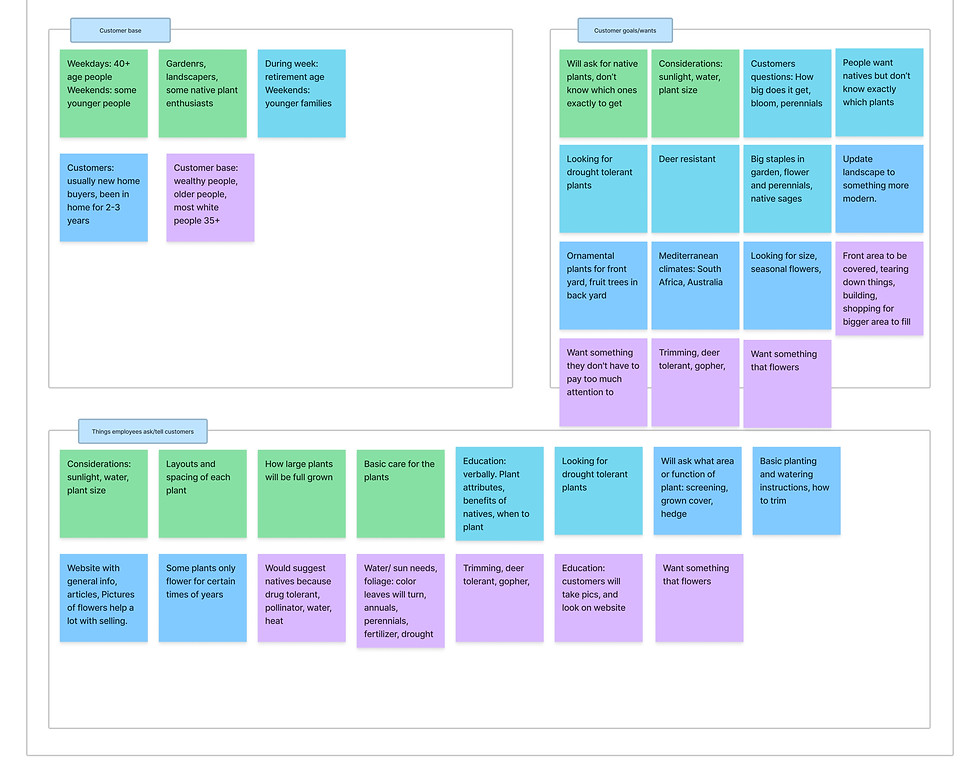
Customers are young families, homeowners, retired, 40yo+
Customer goals are knowing the plant, growth phases, what it attracts
Employee assists with basic planting questions, water, and sun needs, along with which plant has flowers
Discover
Define
Ideate
Design
Reflection
Researcher: Landscapers & Water Companies
User Personas: Landscapers
Journey Mapping: Landscapers
UX/UI Design: Onboarding & Turf Removal Tutorial Screens
My Role
Flowrish consisted of teammates Vivan, Mingshi, and I focused on different users.
In my case, they were water companies and landscapers.
The problem in California, property owners lack knowledge of native plants, incentives, and landscaping examples with native plants.
The solution, Flowrish empowers property owners to use augmented reality to visualize landscaping with native plants, find local nurseries and landscapers, and provide local rebate opportunities.
Sketches

On-Boarding Sketches - By Jennifer
While a prototype was already in existence, our client requested our team to generate low-fidelity sketches.
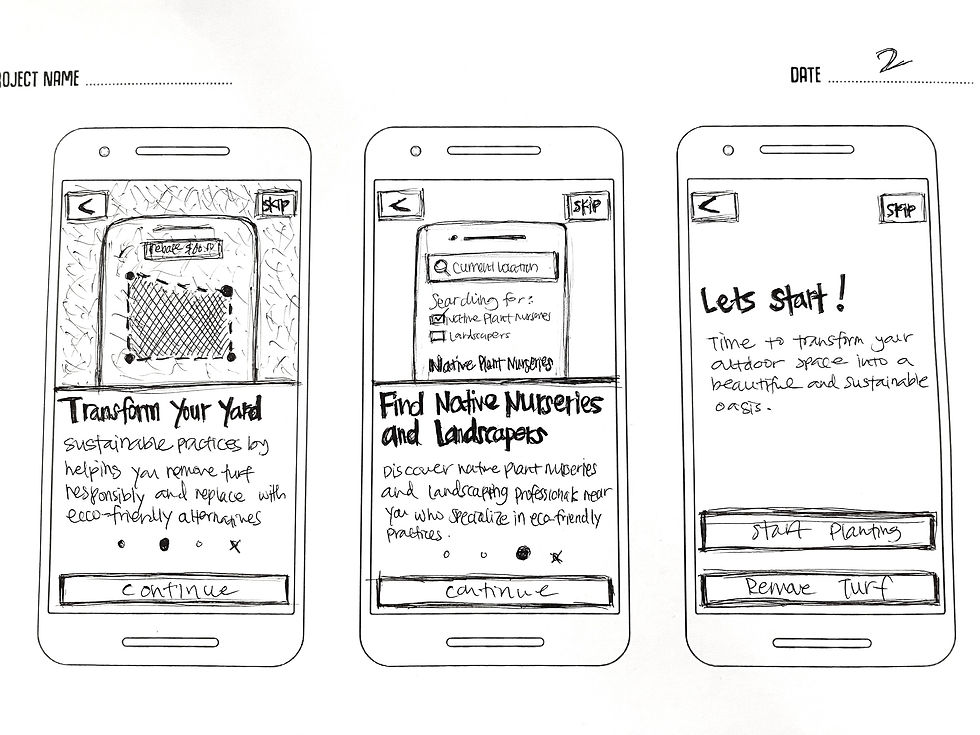
Given the limited time available, my teammates and I opted to divide responsibilities, and I focused on sketching the onboarding screens to introduce the app and it's capabilities.
As my teammates and I have been focusing on different end users, for our low-fidelity designs we decided to sketch solutions that we found would improve the users experience: DIY Gardeners and Gardeners working with Landscapers for yard transformations.

Setting Up The User - By Vivian
Through our interviews, we observed that users may have varying levels of ambition in their gardening, from simpler tasks like planting native plants to more extensive yard transformations.

We recognized that collecting user information would be instrumental in tailoring gardening guidance to meet their specific needs.
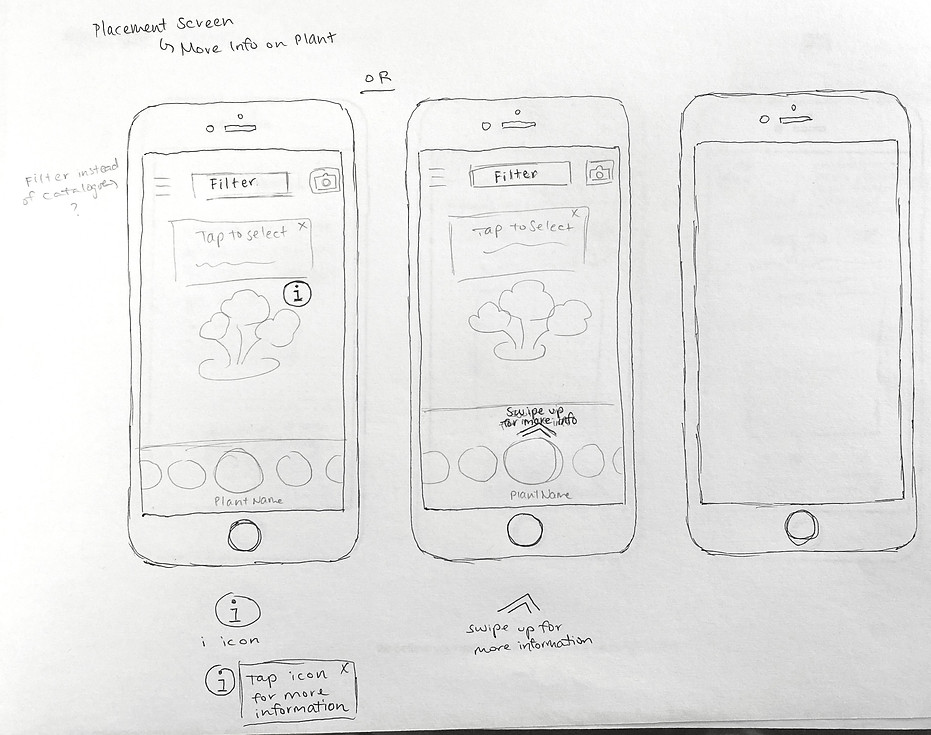
Tutorial Of App - By Mingshi
Before commencing app development, we determined that providing a tutorial showcasing the app's features would be an ideal way to acquaint users with its navigation, thereby reducing the learning curve.
